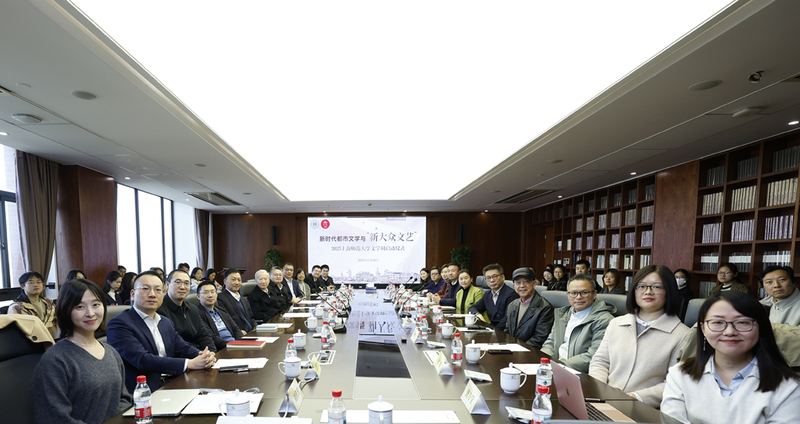
On the afternoon of November 28th, the 2025 Shanghai Normal University(SHNU) Literary Week commenced at the Guangqi International Scholars Center. The theme of this year's Literary Week was "Urban Literature of the New Era and 'New Popular Arts'." Attendees at the opening ceremony included Jin Binghua, former Vice Chairman of the Chinese Writers’ Association, Ma Wenyun, Full-Time Vice Chairman of the Shanghai Writers Association, Lin Zaiyong, Party Committee Secretary of SHNU, Chen Heng, SHNU President and representatives from different collaborating institutions.
In his speech, Chen Heng stated that this literary week activity represents a conscious inheritance and proactive innovation of our university's profound literary and historical traditions, as well as an active exploration of new pathways to integrate art and literature with the public.
In the subsequent roundtable discussion, guests such as Ji Yaya, editor-in-chief of October magazine, Lu Nei, member of the Shanghai Writers Association's presidium, Yang Jianlong, professor of Shanghai Normal University, Li Weichang, deputy editor-in-chief of Shanghai Literature and Art Publishing House, online literary writer He Xiao, and young writer Gong Wanying, among others, engaged in a conversation about the new trends, phenomena, and practices of "New Popular Literature and Art." The discussion covered firsthand experiences from internet writing to the era of artificial intelligence, explored the dialectical relationship between the "old wave" and the "new wave," and examined the resistance and sense of dignity of urban characters in the new era. Additionally, it addressed the transition from the "print media era" to the "convergence media era," discussed the publishing and dissemination logic of the "traffic era," and offered expectations and guidance for future creators. It also touched on the challenges and responses faced by realistic themes in online literature, emphasizing the irreplaceable status of literature.